
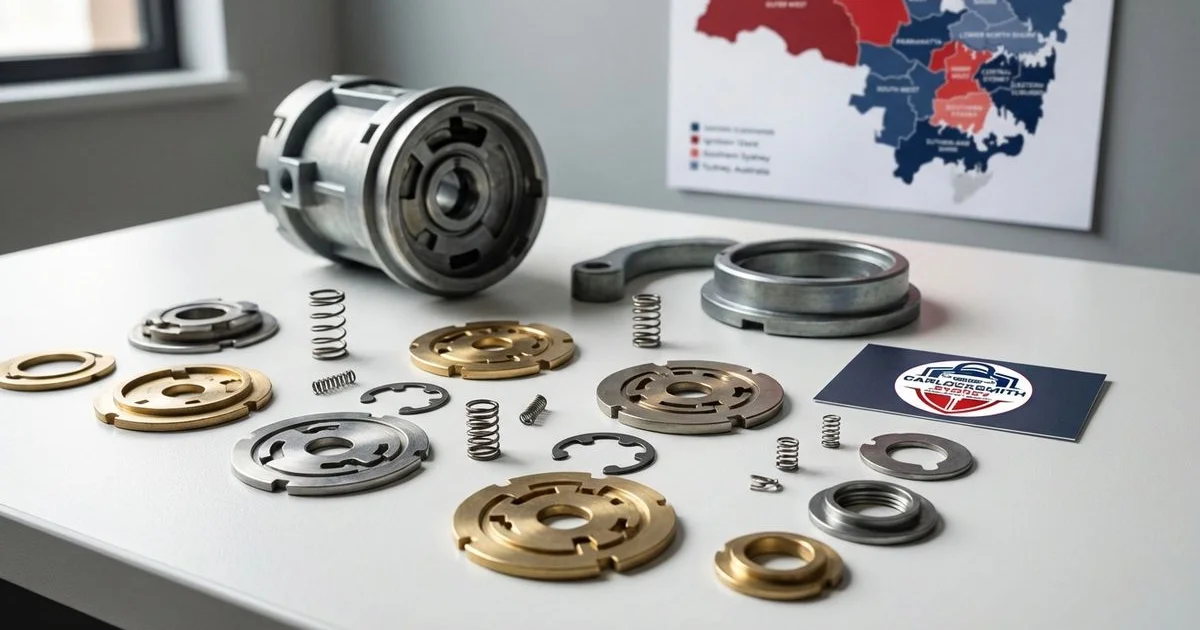
The Hidden Culprit Behind Most Ignition Problems
You know that sinking feeling when you slide your key into the ignition and it just refuses to turn? We see this panic every day across Sydney. It usually happens at the worst possible time. You might be late for a meeting or loading groceries into the boot. The instinct is to jiggle the key harder or blame the battery.
From our experience on the road, the battery is rarely the issue when the key physically won’t rotate. The real problem is likely hiding inside the lock barrel itself.
We are talking about worn ignition wafers. These tiny components are the gatekeepers of your vehicle’s security. When they fail, your car is effectively bricked until they are fixed.
This guide explains exactly what is happening inside your steering column. We will cover why it happens and the specific steps we take with professional ignition repair to get you back on the road without replacing the entire ignition system.
What Are Ignition Wafers?
Ignition wafers are small, flat metal tumblers located inside your ignition cylinder. Think of them as the unique fingerprint reader for your car key. Unlike the cylindrical pins you might find in a front door deadbolt, automotive wafers are flat plates, usually made of brass or nickel silver.
These plates function on a simple binary principle. They either allow the lock to turn or they block it completely.
Each wafer contains a precise window or slot cut into its center. When you insert your car key, the “bitting” (the jagged edge of the key) passes through these windows. The key lifts or lowers each wafer to a specific height.
If the key is correct, every single wafer retracts flush against the cylinder, creating a perfect circle that allows rotation. If even one wafer is out of alignment by a fraction of a millimeter, it protrudes from the cylinder and hits the housing. This creates a hard stop.
How Many Wafers Are in Your Car?
The number of wafers depends entirely on the manufacturer and the complexity of the security system. We typically see the following configurations in vehicles around New South Wales:
- Standard configurations: Most ignitions contain between 8 and 10 wafers.
- Toyota & Honda: These models frequently utilize a “split wafer” system, often totaling 8 to 10 split tumblers. This doubles the points of contact and security but also doubles the potential wear points.
- European car Models: Vehicles like Volkswagen or BMW often use 6 to 8 wafers but with significantly tighter engineering tolerances.
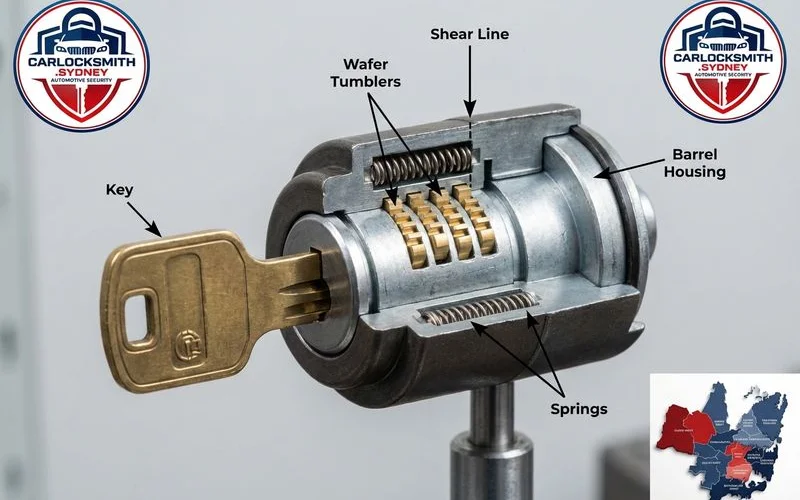
The Mechanics of the Turn
The process of starting your car seems instantaneous. However, a mechanical sequence occurs in milliseconds inside the barrel.
Here is the step-by-step interaction:
- Insertion Phase: As the key enters, it physically pushes against the spring-loaded wafers.
- Height Alignment: The cuts on the key lift each wafer against its spring tension.
- Shear Line Clearance: This is the critical moment. The wafers must line up perfectly with the “shear line”—the gap between the inner plug and the outer housing.
- Rotation: Once the shear line is clear of obstructions, the inner barrel rotates. This engages the electrical ignition switch behind the lock.
- Return: When you pull the key out, springs force the wafers back into their locking positions, disabling the barrel.
Every single start cycle grinds metal against metal. Over the lifespan of a vehicle, this friction inevitably changes the shape of the components.
Why Wafers Wear Out
Wear is a physical certainty for any mechanical part involving friction. We find that ignition failure is rarely a defect but rather a result of long-term usage.
Several specific factors accelerate this degradation.
Metal Fatigue and Erosion
Your key is harder than the wafers. Most car keys are made of nickel-plated brass or steel, while the wafers are often softer brass. Every time you insert the key, you are essentially filing down the contact points of the wafer.
Over 50,000 or 100,000 starts, the “ramp” on the wafer wears down. Eventually, the wafer no longer lifts high enough to clear the shear line. It stays sticking out just enough to catch on the housing.
The “Heavy Keychain” Effect
Gravity is an enemy of your ignition. We often see drivers with massive keychains loaded with gym fobs, decorative trinkets, and house keys.
This extra weight acts like a pendulum. As you drive over bumps or potholes in Sydney, that weight pulls the key downward. This uneven force grinds the bottom wafers against the barrel faster than the top ones.
Environmental Debris
Ignition barrels are not sealed vacuums. Lint from your pocket, sand from a beach trip to Bondi, or general dash dust settles inside the keyway.
This debris mixes with existing factory grease to form a grinding paste. This paste accelerates wear and can cause the tiny springs behind the wafers to seize up.
Poorly Duplicated Keys
Using a copy of a copy is a recipe for disaster. If your primary key is already worn by 10%, a copy made from it will be 10% inaccurate from the start.
We see this compounding error frequently. The new key might work for a while, but it forces the wafers into unnatural positions. This expedites the failure of the lock cylinder.
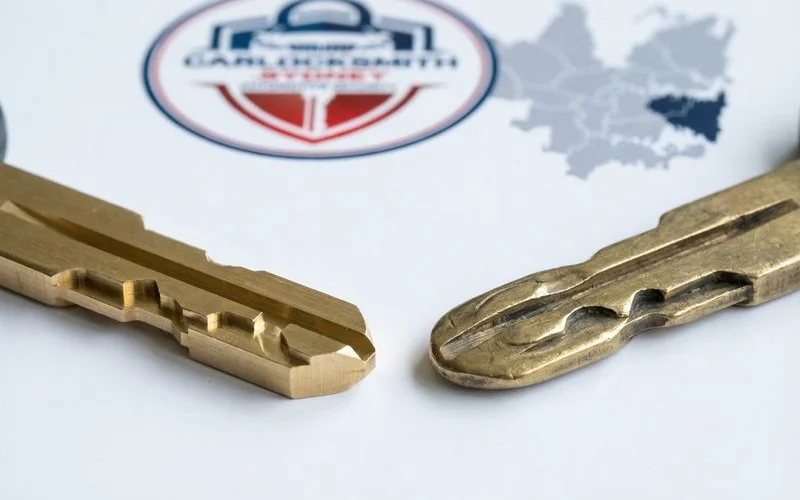
Warning Signs: Catch It Before You Are Stranded
Ignition failure rarely happens without a warning. Your car will almost always give you hints that the wafers are nearing the end of their life.
Pay attention to these symptoms to avoid a tow truck bill.
The “Warning Wiggle”
You insert the key, but it won’t turn immediately. You have to pull it out a fraction of a millimeter or wiggle it up and down while turning.
This is the most common early sign. You are manually acting as the alignment tool because the wafers are too worn to do it themselves.
Gritty Rotation
A healthy ignition should feel like cutting through warm butter. If you feel a crunching sensation, resistance, or “steps” as you turn the key, the wafers are dragging against the cylinder wall.
The “Stuck in ON” Scenario
Sometimes the wear prevents the key from turning back. We receive panicked calls from drivers whose engine is off, but the electrical system is stuck in the “Accessories” mode because the key won’t rotate back to the lock position.
This drains the battery and leaves the car vulnerable.
Comparison Test
If you have a spare key that has sat in a drawer for years, try it. If the unused key works perfectly while your daily key struggles, the issue is likely a combination of a worn key and worn wafers.
The Professional Fix: Wafer Replacement
Many mechanics will suggest replacing the entire steering column or ignition assembly. This is often unnecessary and expensive.
We prefer a surgical approach. A qualified automotive locksmith can replace just the wafers. This keeps your original key (if it is in good shape) and your original door locks matching.
Step 1: Barrel Extraction
We remove the ignition barrel from the housing. On some cars, like older Holdens or Toyotas, this is a simple pin release. On modern vehicles, it often requires removing the airbag and steering wheel shroud.
Step 2: Decoding and Disassembly
The locksmith carefully strips the barrel. We remove the retaining clips and slide out the inner cylinder to expose the wafers.
Step 3: Cleaning and Inspection
We flush out the old grease and metal shavings. Then, we measure the existing wafers to determine the original factory cut code.
Step 4: Re-Wafering
This is the core of the repair. We discard the old, worn tumblers and springs. We install brand-new wafers that match the manufacturer’s original specifications.
If your key is also worn, we will cut a new car key replacement to “code” (factory specs) rather than tracing your worn key. This restores the system to “day one” condition.
Step 5: Testing
The barrel is lubricated with a dry lubricant and reassembled. We test the rotation to ensure it is buttery smooth before reinstalling it in the vehicle.
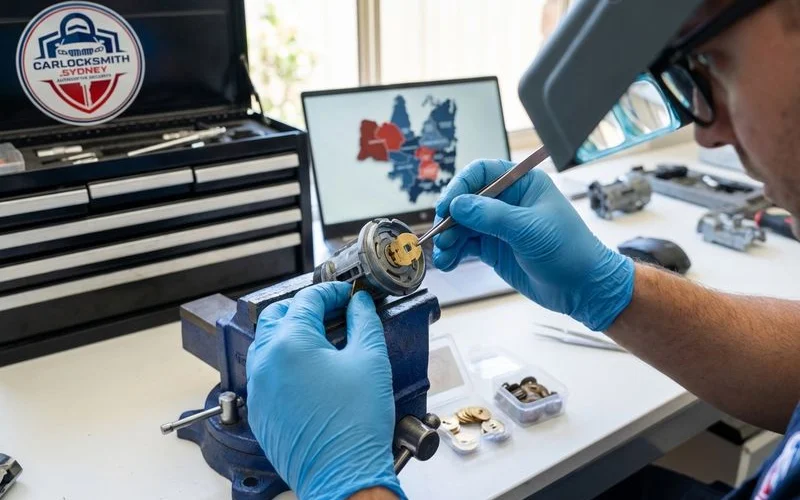
Typical Lifespan of Ignition Components
While every driver is different, we have gathered data from thousands of repairs to create a general timeline for wafer health.
| Odometer Reading (km) | Wafer Condition | Recommended Action |
|---|---|---|
| 0 - 80,000 | Factory Fresh | Keep key clean; avoid heavy keychains. |
| 80,000 - 150,000 | Minor Wear | Normal operation. If sticking occurs, check the key condition. |
| 150,000 - 250,000 | Significant Wear | ”Jiggle” symptoms likely. Plan for wafer replacement service. |
| 250,000+ | Critical Wear | High risk of failure. Proactive replacement is cheaper than emergency service. |
Prevention Tips from the Pros
You can extend the life of your ignition with a few simple habits.
- Lighten the Load: Remove non-essential keys from your ring. Your ignition cylinder is designed to hold the weight of a car key and a remote, not a janitor’s keyring.
- Avoid “Wet” lubes: Never spray WD-40 or silicone into your ignition. Liquid lubricants trap dust and eventually turn into a sticky gum that jams the wafers.
- Use Dry Graphite: If the lock feels dry, use a small amount of graphite powder. It lubricates without attracting dirt.
- Rotate Keys: If you have two keys, swap them every six months. This spreads the wear across two blades rather than destroying one.
Cost Breakdown: Sydney Region (2026)
One of the biggest misconceptions is that ignition repair costs thousands. While dealerships often charge premium rates for full unit replacements, locksmith pricing is generally much lower.
For a standard wafer replacement service in the Sydney metro area, current market rates are quite reasonable.
- Standard Service: Expect to pay between $180 and $300. This covers the call-out, labor, and parts for most standard Japanese and Korean vehicles.
- High-Security Vehicles: For European cars or newer models with complex laser-cut keys, the price typically ranges from $280 to $450.
- Dealership Comparison: A dealership will often quote $800 to $1,200 because they usually replace the entire column assembly and require the car to be towed to them.
Final Thoughts
Ignoring a sticky ignition is a gamble that usually ends with a car stuck in a shopping center car park. Worn ignition wafers are a mechanical reality, but they don’t have to be a disaster.
If you have to jiggle your key to start the engine, the clock is ticking. Addressing the issue early allows for a simple, affordable repair that restores the smooth, crisp feel of a new car. To understand when repair is enough versus when full replacement is necessary, read our comparison of ignition repair vs replacement.
Call us today if your key is giving you trouble. We can come to you, diagnose the specific wafer issue, and get it fixed on the spot.
Looking for this service?
View our ignition repair service →